Explained simply
How a SKYCELL battery works
No technical background needed. Here's what's inside, what the lights mean, and why lithium beats old-style batteries.
How it works
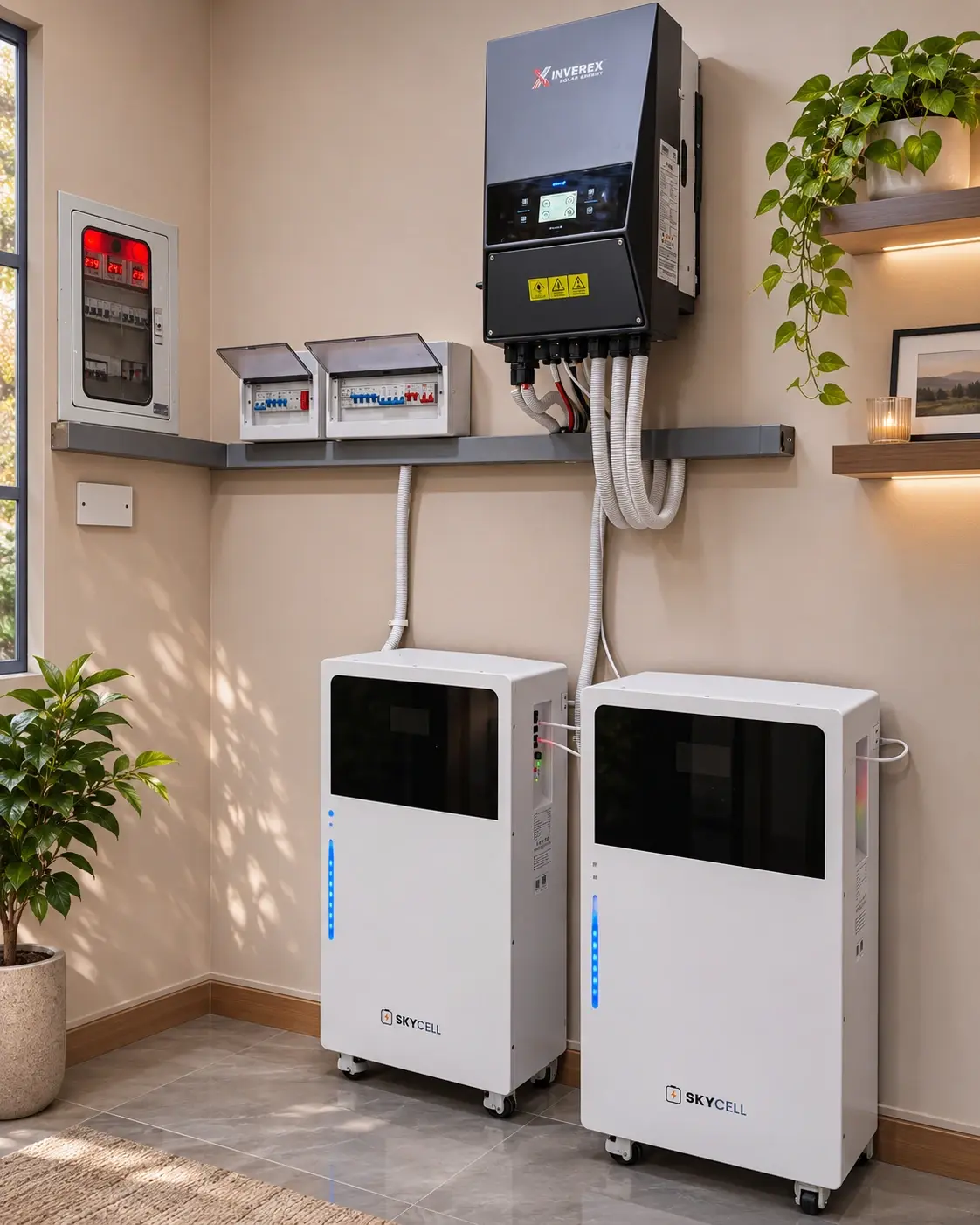
Backup power in three simple steps
You don't need to be an expert. Here is what a SKYCELL battery does for you, every single day.
- 1
Charge
The battery fills up with energy from your solar panels during the day, or from the grid when electricity is available.
- 2
Store
The energy is safely saved inside the battery until you need it. The lights on the front show how full it is.
- 3
Use
At night or during a power cut, your inverter draws power from the battery — so your home or shop keeps running.
The battery inside
What is LiFePO₄?
LiFePO₄ stands for lithium iron phosphate. It's a type of lithium battery known for being very stable, long-lasting and maintenance-free. That's why it's a popular choice for storing energy at home.
Built-in protection
A smart controller inside the battery (called a BMS — battery management system) watches over it and helps protect against overcharging and overheating.
Works with your inverter
The battery connects to a solar or backup inverter, which decides when to charge and when to supply power. Ask us whether your inverter is compatible.
Simple to read
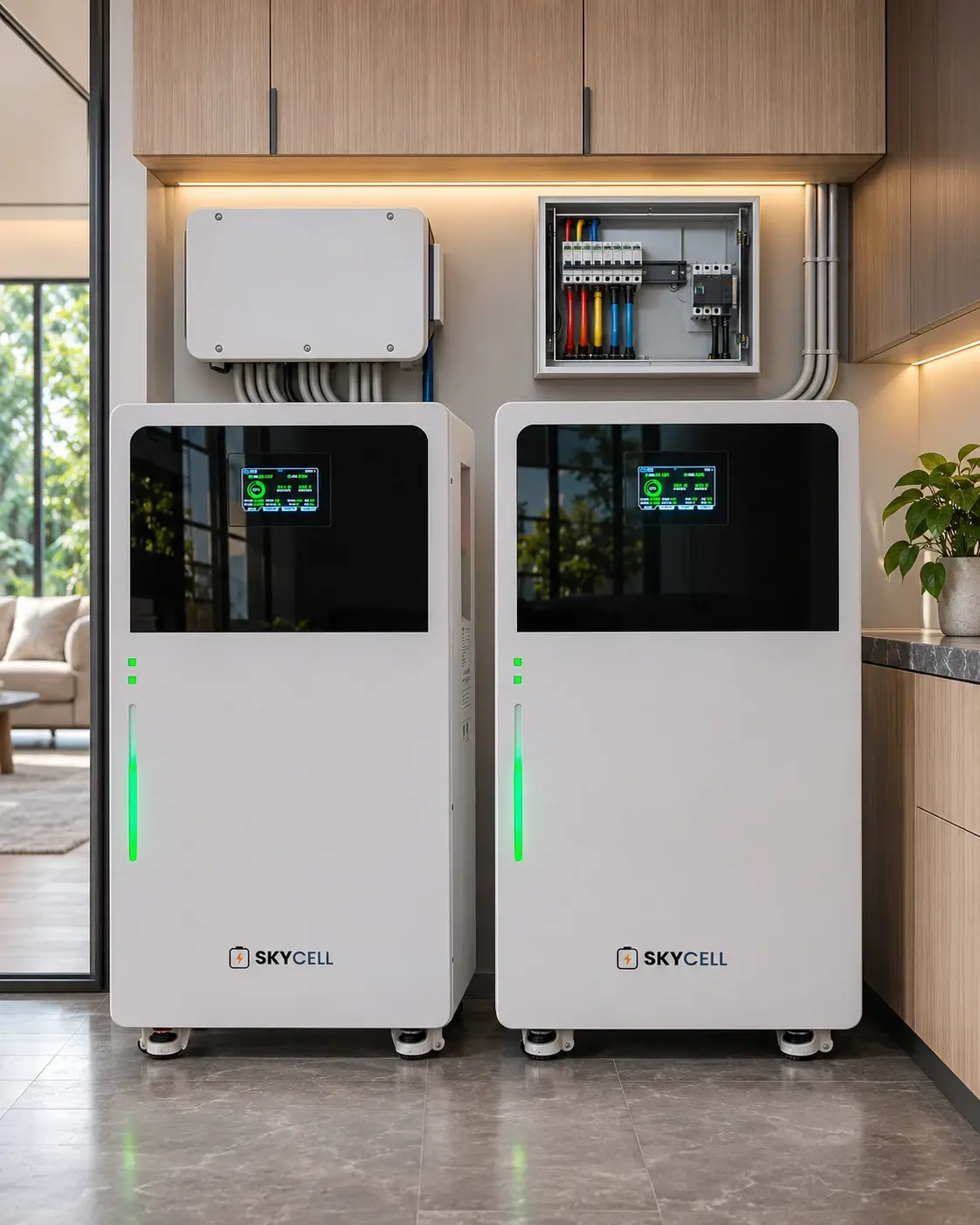
The front display and side light bar show the battery's status at a glance — no app needed.
Professional installation
Always have your battery installed by a qualified installer, following local electrical rules.
Know your battery
What you'll see on your battery
Display screen
The dark glass panel at the top shows the battery's status when it is switched on.
Light bar
A column of lights on the side. More lights lit means more charge left.
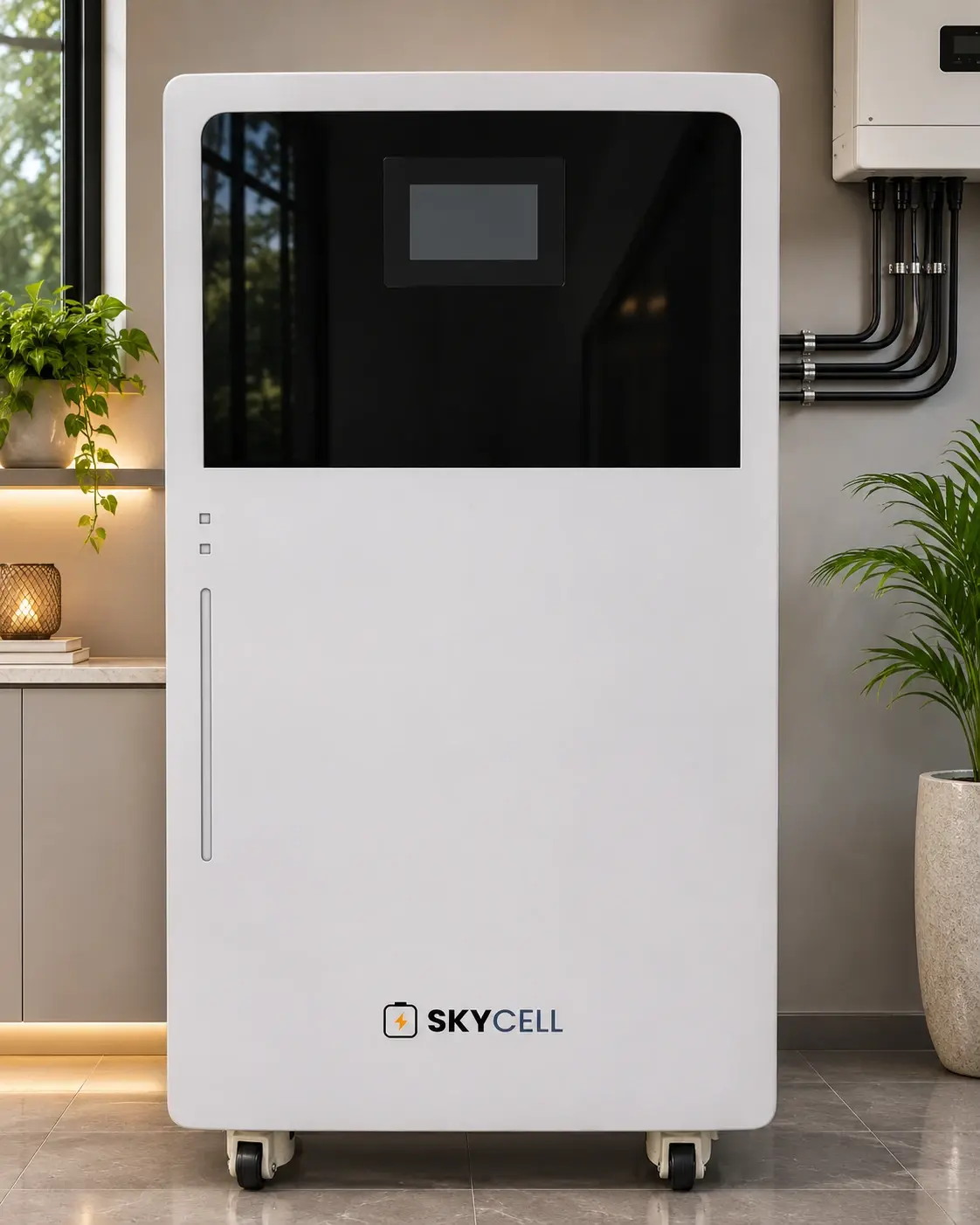
Wheels
Lets your installer roll the battery neatly into place.
Something doesn't look right? Send us a photo of the display on WhatsApp and we'll help.
Compare
Lithium vs. old lead-acid batteries
| Feature | SKYCELL lithium | Lead-acid |
|---|---|---|
| Maintenance | Practically none | Regular water top-ups |
| Acid & fumes | None | Can release fumes |
| Lifespan | Many years | Usually shorter |
| Size for the same energy | Compact | Bulky and heavy |
Jargon buster
Words you might hear
- Inverter
- The box on the wall that turns battery power into the electricity your home uses.
- kWh (kilowatt-hour)
- How much energy a battery can store. More kWh means longer backup.
- Backup time
- How long the battery can power your appliances. It depends on what you switch on.
- BMS
- Battery management system — the battery's built-in safety brain.
Questions
Common questions, simple answers
What does a home battery actually do?
It stores electricity so you can use it later. When the power goes out, or the sun goes down, your home keeps running on the energy saved in the battery.
Do I need solar panels?
No, but they help. The battery can be charged from the grid whenever electricity is available. With solar panels, it charges from the sun at no extra cost.
How long will it power my home?
It depends on what you switch on. A few fans and lights use far less than an air conditioner. Tell us what you want to run and we will recommend the right setup.
Is it safe to keep inside my house?
SKYCELL uses LiFePO₄, one of the most stable lithium battery types. As with any electrical equipment, it should be installed by a qualified installer.
Does it need any maintenance?
Practically none. Unlike old lead-acid batteries, there is no water to top up and no acid or fumes.
How do I buy one?
Request a quote on this website or message us on WhatsApp. We will ask a few simple questions and send you a price.